Corona Del Mar Architecture Styles That Shape the Village
June 25, 2026
June 25, 2026
If you have ever walked through Corona del Mar and felt like the homes tell the story of the neighborhood, you are not imagining it. This coastal village has a layered architectural identity shaped by early lot patterns, preservation efforts, postwar growth, and view-focused contemporary design. If you are buying, selling, or simply trying to understand what gives CdM its lasting appeal, this guide will help you see how architecture influences character, livability, and value. Let’s dive in.
Corona del Mar is part of Newport Beach, and its coastal setting plays a major role in how the neighborhood looks and feels. City sources describe it as the “Crown of the Sea,” with beaches, lookout points, and an inland village core that gives the area both shoreline access and a distinct neighborhood rhythm.
That village feel is not accidental. The first subdivision was filed in 1904, and the original layout used 30-by-120-foot lots. Those compact lots helped shape the intimate street pattern you still notice today, especially on the flower-named residential streets where homes often sit close to the sidewalk and each block feels connected.
In Corona del Mar, architecture is closely tied to the lot. Narrow parcels and a village-scale street grid tend to reward designs that use space carefully, protect light, and respect neighboring homes.
That is one reason the area does not read like a collection of oversized statements. Even when homes are newly built or extensively remodeled, the strongest designs usually respond to scale, height, and orientation rather than ignoring them.
One of the most recognizable home types in Corona del Mar is the cottage. The City of Newport Beach defines these homes as smaller dwellings that reflect the traditional development pattern in old Corona del Mar, often with one story in front and a small second story over rear parking.
In 2022, the city adopted a cottage preservation program to make it easier to remodel and preserve these homes instead of demolishing them. The program helps maintain the classic low-slung cottage form by keeping the front half of the lot one story and the rear half two stories, while prohibiting third floors.
That framework helps explain why cottage scale matters so much in CdM. It protects the roofline, keeps the street experience more open, and preserves the smaller-home pattern that many people associate with the neighborhood’s original charm.
Part of the appeal is scarcity. According to the Corona del Mar Historical Society, a spring 2020 cottage survey counted 540 pre-1960 cottages, then 524 after 16 more demolitions, and noted that more than 70 percent of the original cottages had already been torn down.
For buyers and sellers, that matters. When a home type becomes harder to find, its character can carry extra weight, especially in a place where architectural fit and neighborhood context are part of the value story.
Corona del Mar has never been defined by just one look. Historic inventory records from the City of Newport Beach show a mix that includes a 1912 bungalow, a 1930 Mission Revival house, a 1928 Cape Cod home, a 1936 Old English Period House, and a 1940 Early California Adobe.
That range is one of the neighborhood’s strengths. Instead of feeling uniform, old CdM reads as layered and collected, with cottages, bungalows, and period revival homes sitting side by side in a way that feels organic.
A design feature on the area also described a seaside section of Corona del Mar as generally leaning traditional, with homes often falling into the Country French or Spanish Colonial Revival camp. That supports the idea that the neighborhood’s identity comes from a blend of styles rather than a single dominant architecture.
Even when the styles differ, many older Corona del Mar homes share a few themes:
These traits help create the walkable, village-like texture that many buyers respond to right away.
If you want to understand Corona del Mar’s postwar architectural layer, Irvine Terrace is one of the clearest examples. Newport Beach Community Connection says the subdivision was developed by the Irvine Company in the 1950s and includes about 390 homes on terraced streets above Newport Harbor.
The neighborhood also uses height limits that help preserve views and consistency. That combination of planning, topography, and era gives Irvine Terrace a different feel from the cottage blocks of old CdM, while still fitting into the broader Corona del Mar identity.
Today, the area mixes mid-century homes with newer construction. That makes it especially interesting for buyers who appreciate clean lines, postwar layouts, and the potential for thoughtful updates.
A featured 1969 Corona del Mar remodel offers a good example of how many postwar homes are approached today. The renovation kept the original footprint but reorganized the home for better flow, natural light, and outdoor use while respecting neighborhood scale.
That approach says a lot about Corona del Mar. In many cases, the goal is not to erase what came before, but to adapt it in a way that works better for current living while keeping the home grounded in its setting.
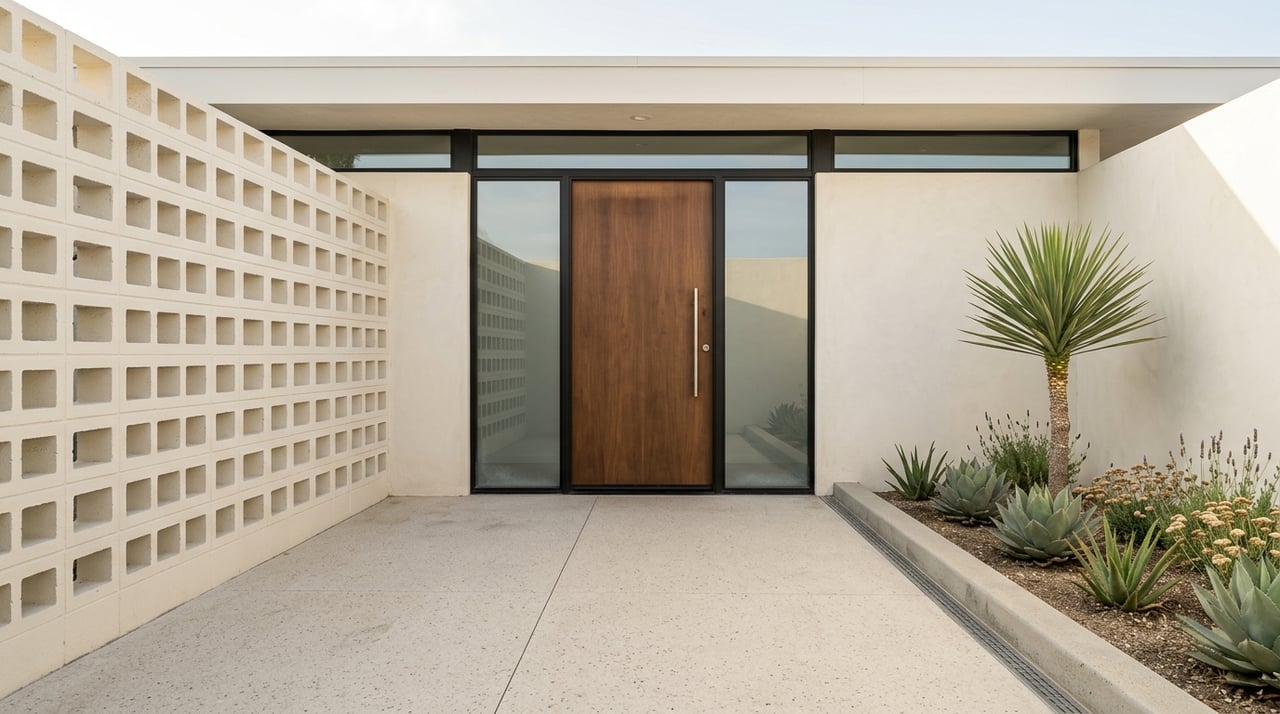
Contemporary architecture has become another defining part of Corona del Mar, especially on view lots and narrow infill parcels. In these homes, design often centers on daylight, privacy, circulation, and the relationship between interior rooms and outdoor spaces.
A Heliotrope Avenue duplex shows this clearly. Designed on a narrow coastal lot, it brought light deep into the interior and used a lower-slung form shaped by height restrictions, resulting in a boldly contemporary home that still responds to local constraints.
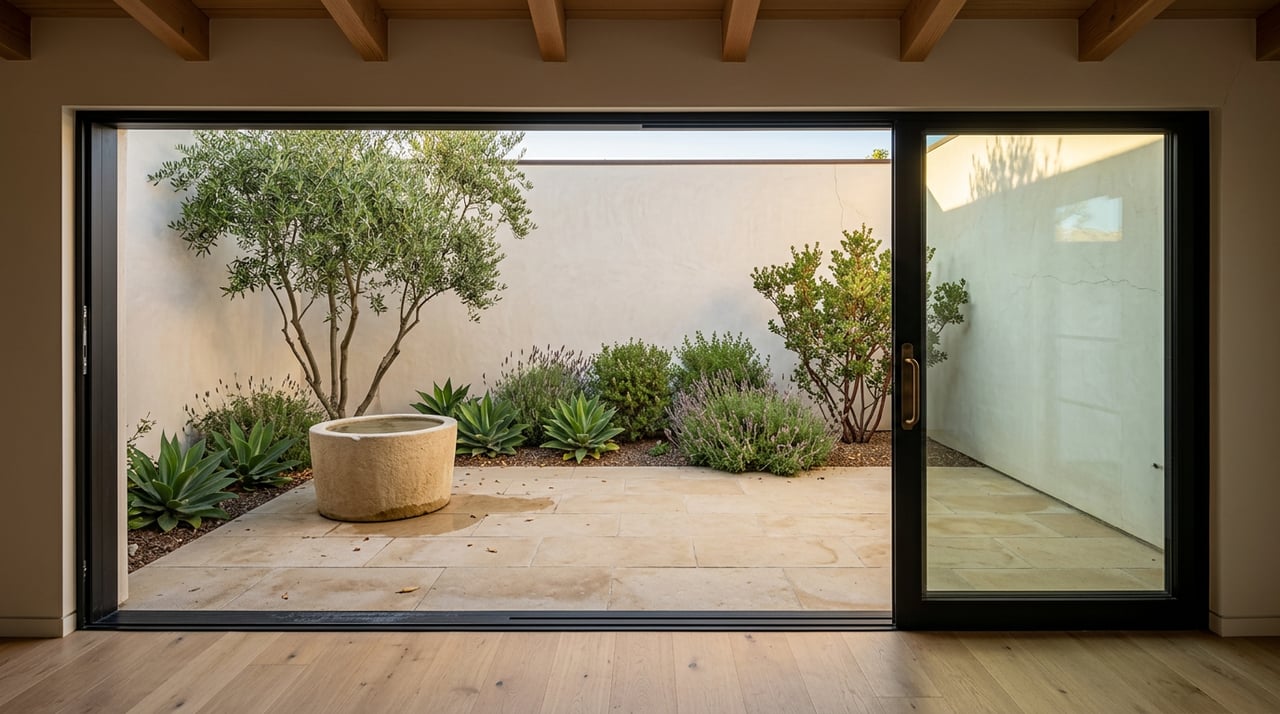
Another Corona del Mar retreat featured a central courtyard, large glass openings, and outdoor living areas that blurred the line between inside and out. Importantly, the small lot and height limits kept the structure low and compact, reinforcing a local pattern you see again and again.
Many newer and remodeled Corona del Mar homes emphasize:
In premium properties, you may also see rooftop decks, front terraces, and layouts designed around entertaining. The common thread is usually not ornament, but how well the house captures views, light, and flow.
In Corona del Mar, orientation is not just a design detail. It is often central to how a home functions every day. One hilltop home was designed specifically around Newport Harbor views, ocean breeze, natural light, and ventilation, showing how closely architecture here can respond to site conditions.
Planned community regulations in Corona del Mar also support that pattern. City rules for the Corona del Mar Homes planned community allow side-yard areas for recreation and gardens and require trellis-beam designs that preserve open space for light and air.
That helps explain why indoor-outdoor living feels so natural in this market. It is not just a trend. In many cases, it is built into the way homes and lots are meant to work.
In Corona del Mar, value is often tied to more than square footage. Scarcity, design fit, lot orientation, and view protection all play a role in how buyers evaluate a home.
The shrinking supply of original cottages is one part of that equation. Another is the premium attached to well-positioned homes, especially newer properties on the bluffs above the harbor. Together, those patterns suggest that buyers are often paying for a combination of setting, architectural character, and how well a home fits the scale of the block.
For sellers, that means presentation matters. A home’s design story, relationship to the lot, and connection to Corona del Mar’s broader architectural identity can all shape how it is perceived in the market.
If you are evaluating a home in Corona del Mar, it helps to look beyond finishes alone. Pay attention to how the architecture works with the site and the street.
Here are a few smart things to notice:
These details can influence both daily enjoyment and long-term market appeal.
What defines Corona del Mar is not one style, but the way several styles live together. Original cottages, revival-era homes, mid-century neighborhoods, and contemporary coastal builds each contribute something different.
That mix gives CdM its depth. You can see the neighborhood’s history in the built environment, but you can also see how design continues to evolve around compact lots, ocean air, natural light, and the value of staying connected to the village scale.
If you are thinking about buying or selling in Corona del Mar, understanding that architectural context can help you make better decisions. For tailored guidance on design-driven coastal homes, local positioning, and market strategy, connect with Andrea Ballesteros.


Case Study
We will work tirelessly to ensure you have the best experience whether you are selling your home, looking to purchase an investment property or searching for your forever house. We are here for you and don’t just walk away after closing. We pride ourselves on our long term relationships with our clients and will guide you through all the necessities you need before, during and after your selling or buying experience.